AppraisalSTAR Guidelights On The Path -- forms that guide the real estate appraisal process...
INTRODUCING: paper based in-field inspection forms to transfer UAD 3.6 compatible observations across the bridge into the new dynamic format URAR Appraisal Report at your convenience…

Go into each inspection with CONFIDENCE that you will be able to QUICKLY record required inspection observations while still on site — instead of “blanking out” and leaving too much unanswered.
The new format URAR Appraisal Report is entirely digital — a dynamic database interface with a series of electronic entry screens — largely drop-down menu intensive.
Inadvertently selecting the wrong drop-down choice or leaving a field blank instead of answering “None” can be a fatal blockage that prevents your report from being delivered.
Training and maximizing “muscle memory” by selecting from multiple choices via circling, checkboxes, and write-ins has the potential to be faster and more accurate in the field.
With AI technologies on the rise, importing documents into appraisal software as data transfer method is becoming an extremely valid technique that will save much time on DATA ENTRY. More time can be spent in REVIEW and ANALYSIS which should ultimately increase both QUALITY and CONDITION of appraisal reports.
Data entry via mobile apps on devices is ideal in many situations but “dropping down in the field” poses several challenges:
WEATHER: sun, wind, rain, sleet, snow, heat, humidity, etc. impact the usability of electronic devices and human beings while in field on inspection; fiddling with data entry may extend your time exposed to the elements.
INTERNET CONNECTIVITY: no signal, poor signal, dropped signal, or bandwidth issues may be frustrating, especially in rural areas
Digital Device Technical Issues: speed issues, storage issues, power issues, software issues, login challenges, and general issues with mastering technology may pose an embarrassing and time-consuming situation on site; old school pencil, clipboard, measuring tapes, and digital camera are still viable appraiser tools, they are not obsolete and are excellent backups.
ON-SITE EFFECIENCY: remaining on site in your vehicle or on the premises for an extended time entering data may be uncomfortable for both you and the property contact and extends your time away from the office where multi-tasking is easier; using traditional methods while integrating technology at your own pace on select assignments or those that allow for increased flexibility is perfectly acceptable.
EYE-STRAIN: so much of our world is already digital — allowing your eyes to focus on paper offers a healthy change of pace which may reduce eye-strain; having consistent places to record data increases efficiency.
LEGAL ISSUES: narrating your field commentary potentially poses legal issues when property contacts hear you speak one opinion while on site if a different opinion is presented in the final report upon further analysis
Compliance with UAD 3.6 specifications is now mandated for much residential mortgage lending.
Exemptions may kick the can down the road, but the new report is a catalyst for the UPDATES and UPGRADES necessary to keep appraisers relevant in an increasingly data driven environment — where clarity and professional level presentation is now expected by all intended users — WHETHER THEY REQUIRE UAD 3.6 COMPLIANCE OR NOT.
Re-evaluate your appraisal report QUALITY, CONDITION and LEVEL OF UPDATES. If you haven’t updated your workflow processes in 10-15-20 years, now is the perfect time for renovations!
As the new report proliferates, intended users will likely become more comfortable with the format and recognize the added value it offers. There is the potential for the new format to be requested for non-lending work because of the substantial improvements. When we compare current appraisals to historic appraisals the trend was fairly stable over decades but now BOTH the quantity and quality of data is drastically INCREASING. The overall trend indicates that users of appraisals now expect and rely on high quality exhibits and hard data more than ever in their decision making. Other professions (including Realtors, Home Inspectors, and their associated service providers) have stepped up to the plate to provide more comprehensive services for their fees — there is no reason for appraisers to remain 20 years behind the curve.
The Uniform Appraisal Dataset as presented by Fannie Mae and Freddie Mac as Appendix C-1 is 43 pages of report fields with associated data points. The explanations in Appendix F-1 consists of over 375 pages. The project data section of F-1 alone is nearly 20 pages. These are great references back at the office but consulting them while on inspection for basic data entry clarification might be cumbersome.
Using the old URAR appraisal report form as your inspection form worksheet for note taking may result in incomplete data, a return visit to the property, or other time consuming verification because the fields are inadequate to capture all the new required UAD compliant data. The old form collects a bare minimum of information and bare minimum is no longer acceptable.
One way to move forward is to keep one foot in and one foot out of the digital transformation by using reliable paper forms to record data.
Using BRIEF physical inspection forms to document observations in the process of developing and reporting residential appraisal reports is still a comfortable and flexible option for many experienced appraisers.
No need to leave the profession, retire, or limit your work to non-mortgage business because of dramatic changes to the URAR appraisal report.
Until you are proficient in all the new data specifications, the new dynamic report format, and the new software or software updates to produce a compliant report — you might feel more comfortable recording information traditionally to bridge the gap and work through the details at your own speed in the comfort of your office where multi-tasking is beneficial.
SOLUTION: clean, modular, easily readable, streamlined PDF documents designed to manually collect a comprehensive amount of data very efficiently for later data entry into your software of choice AND inclusion in your (digital or not) work file — without the hurdles of conquering technology in the field.
These data collection forms are not simply checklists of new requirements to remember.
Purchase, Download, and Save the forms:
The 4 page form has fields for residential unit data only while the 2 page form has additional fields for residential project data only.
Together they are a 6 page modular set.
Individually they are also modular in that each page collects primarily site, exterior or interior data — not every page is needed for every appraisal.
Only utilize each page as required.
Print for individual use — as often as required:
Use single sided for notes on the back or double-sided to save paper.
Use letter size for convenience or legal size to utilize extra space for commentary and notes.
At only 4 pages and 2 pages, the amount of waste is minimal.
For high-volume offices, consider having the forms printed as tear-off pads.
Record observations:
Check boxes, circle from available selections, or write in custom answers.
There is still plenty of white space to notate “other” information both within the form body and in the margins.
The forms are easy enough for anyone to fill out including non-appraisers; perhaps have homeowners or their agents pre-fill the form to the best of their ability beforehand.
Transmit:
Send photos of the completed pages securely to an assistant to begin data entry immediately upon completion.
Scan and import the document into a software work file as a permanent record.
Collaborate:
Use artificial intelligence (AI) tools to pull the data from the document into software.
Communicate Feedback:
If updates and changes to the forms becomes prudent or significant in nature, new downloads may be issued at annually or as necessary. Updates will be based on user feedback and periodic changes in requirements.
DISCLAIMER: As always, per USPAP, ultimately THE APPRAISER is responsible for collecting all the data required, not a form.
Any form is simply a trusted guidelight leading a path to follow towards a final report.
EXPERIENCE MATTERS: developed by a former graphic design professional who is also a registered trainee real estate appraiser with 24 years experience assisting with residential appraisal report research, data entry, preparation and delivery.
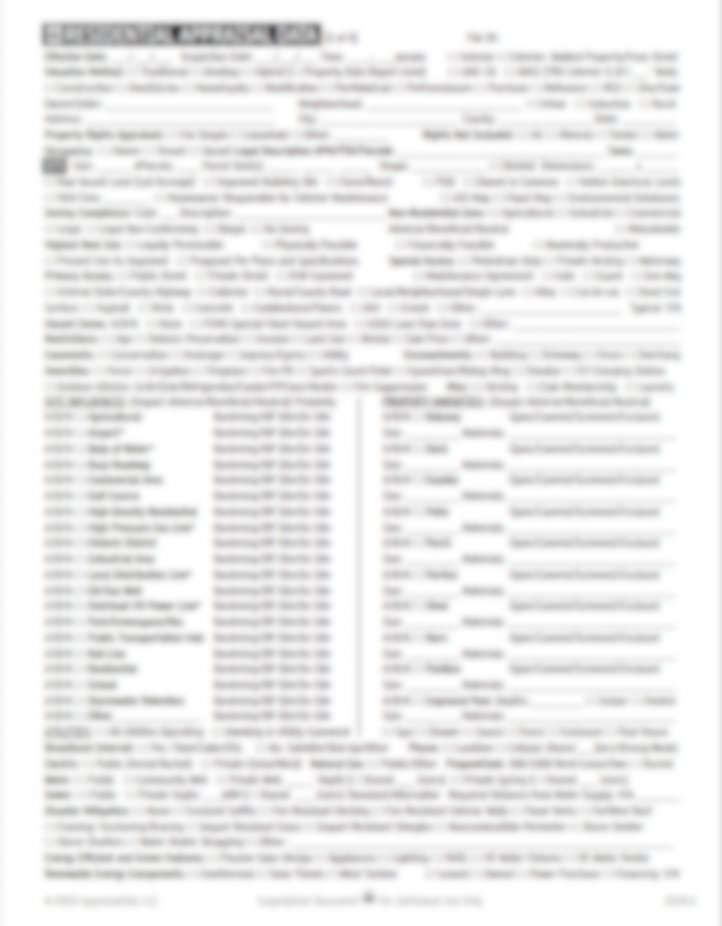

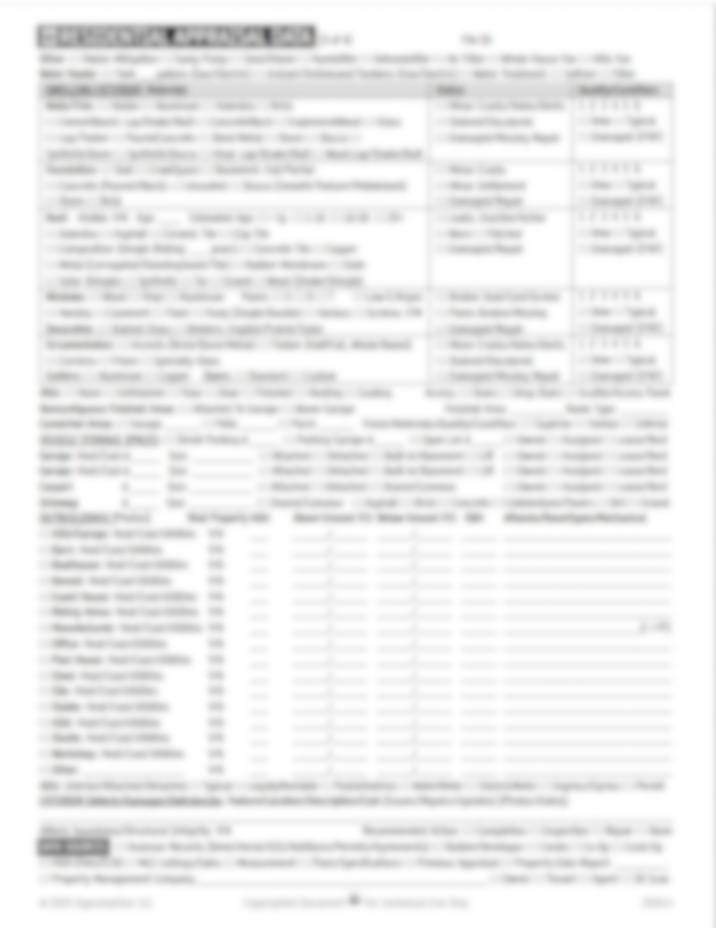
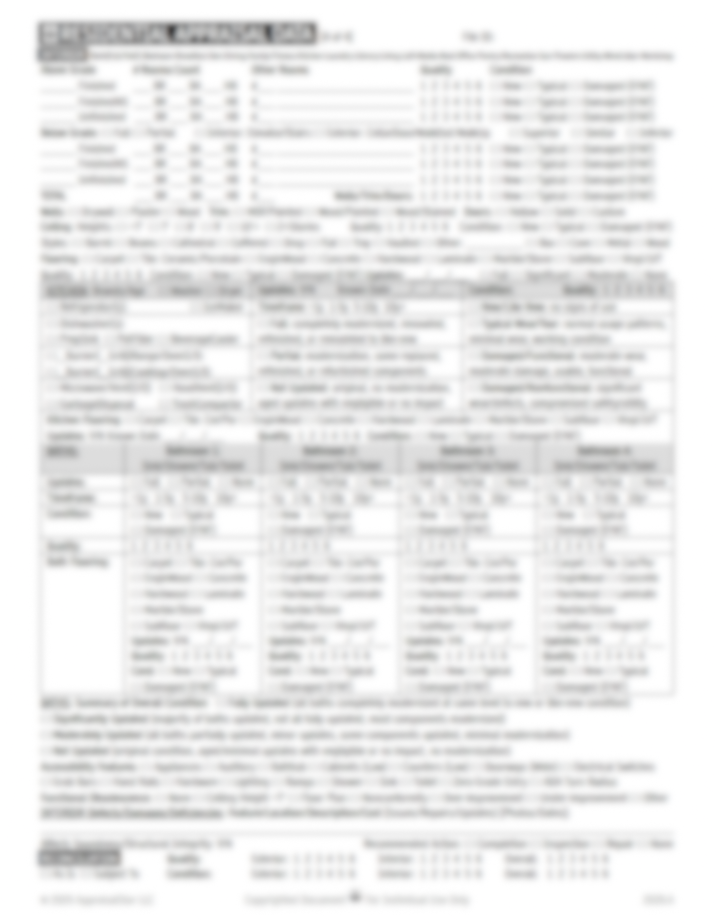
4-Page letter sized black and white high resolution print-enabled PDF document for download. Each purchased download is a license for individual use by a single appraiser only. You will receive a secure link to the file lasting 24 hours after the first download. First release available beginning 09/15/2026. Online preview blurred for document security purposes. Please do not edit or distribute.
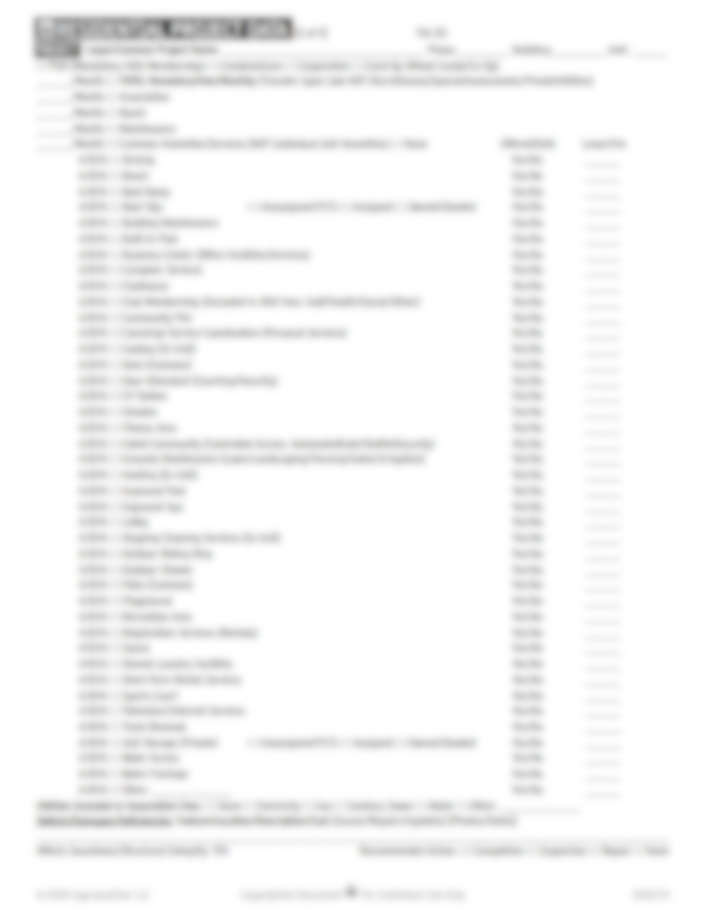
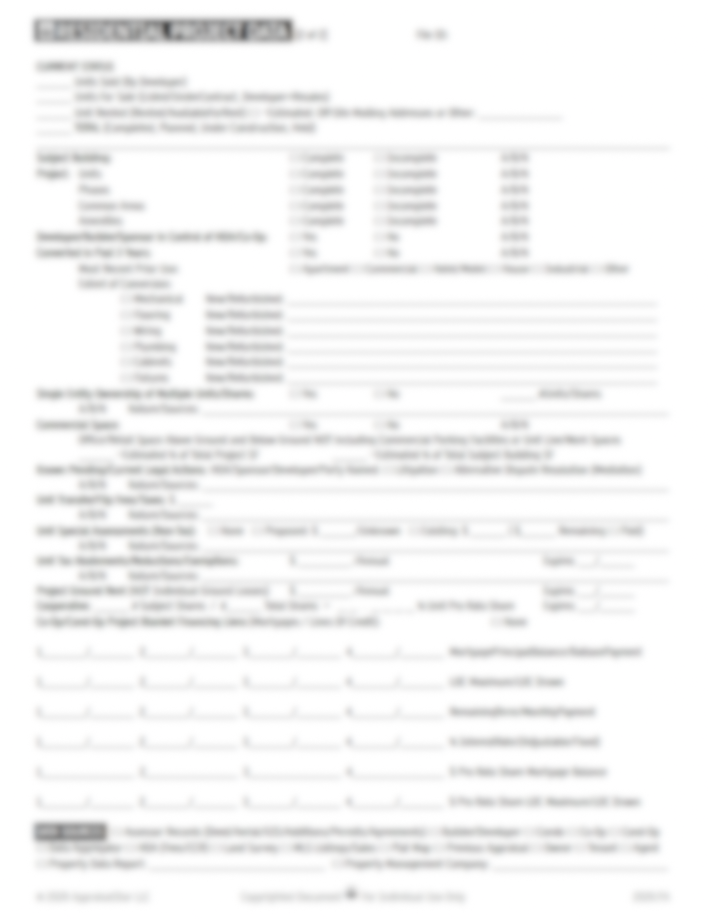
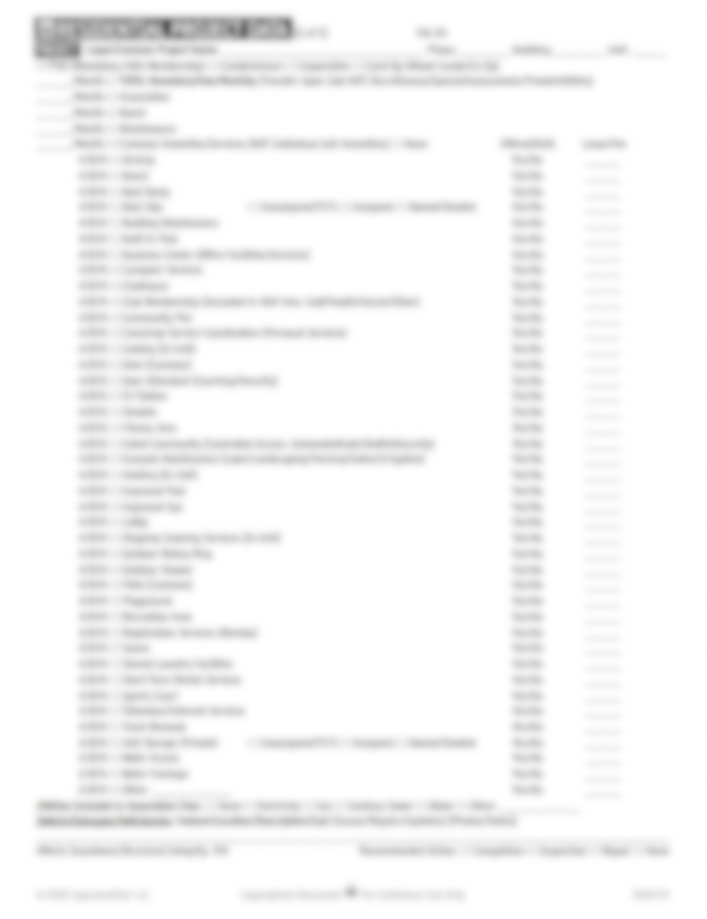
2-Page letter sized black and white high resolution print-enabled PDF document for download. Each purchased download is a license for individual use by a single appraiser only. You will receive a secure link to the file lasting 24 hours after the first download. First release available beginning 09/29/2026. Online preview blurred for document security purposes. Please do not edit or distribute.